PHISHING
DON'T BE FOOLED!
We send you your bill or important information via e-mail or SMS. Convenient, isn't it? Nowadays, scammers also often send emails or SMS messages that are very similar to the ones yallo sends. The scammers try to get you to transfer money to them or provide personal information.
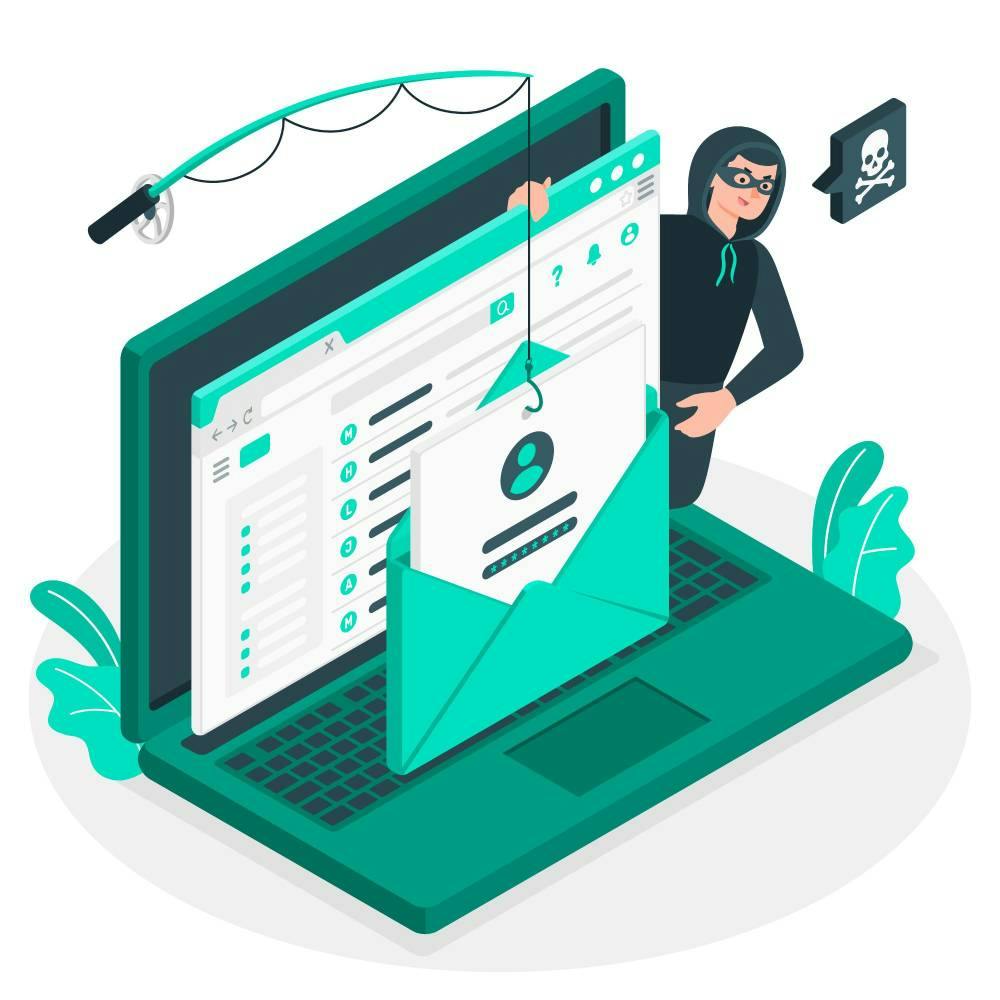
What is phishing?
The term phishing is derived from the English word "fishing". Phishing means obtaining confidential information, such as banking information, credit card numbers, account data and passwords.
Gaining access to this information allows criminals to withdraw money from your account, make purchases or shop online.
The fraudsters will falsify websites and e-mails from well-known companies and ask you to give them or confirm information such as your user name and password. The similarity to the authentic website is surprisingly high.
In order to recognize phishing attacks, caution and common sense are required.
In SMS phishing (smishing), text messages are sent with fraudulent links.
How do I detect phishing?
Spelling mistakes
If you receive a mail with many spelling mistakes, missing salutation or an unknown sender, you should stay alert. However, it is also possible that the phishing mail is error-free.
Unknown URL
Always check the URL before you enter your login details or other personal data on a website. Always make sure that you are on the correct website of the respective provider.
Deadlines
Phishing mails often ask you to act as quickly as possible. Time pressure can therefore be a sign of phishing.

Dos
✔️ Check if the sender's email address ends with @notifications.yallo.ch or @newsletters.yallo.ch or @digital.yallo.ch.
✔️ Check - before you click on it - if a link starts with https://yallo.ch.
✔️ Forward suspicious e-mail to abuse@sunrise.net
✔️ Immediately delete messages that you do not trust.
✔️ Have you found a phishing site? Report the phishing sites via web form.
Don'ts
❌ Never pay with bitcoins or vouchers. We will never ask you for them!
❌ Don't click on a link or button in a message you don't trust.
❌ Do "acquaintances" ask for money? If so, always call them to make sure it's him or her.
❌ Don't reply to messages you don't trust.
What to do if I became a victim of phishing?
Immediately change your login details for social networks, payment systems and credit cards or other services.
Security on the Internet

Sunrise is committed to a secure Internet
Sunrise, together with other leading representatives of the Swiss business community, established the Swiss Internet Security Alliance (iBarry). This Internet security platform offers information and tips on topics such as secure surfing, Internet risks and secure devices.
FAQ
What does yallo do against phishing?
Once we receive a notification of a new phishing email on our behalf, we proceed as follows:
If we notice that we are receiving many inquiries about an incident, we post a notification on the home page.
We contact the company where the site is hosted with the goal of taking the site offline.
We take the necessary action to stop the mailing as soon as possible.
We report the phishing to various anti-spam organizations so that the spam filters are updated.
How to recognize a yallo website
The website of yallo always start with https://yallo.ch, https://support.yallo.ch or https://cockpit.yallo.ch
Always make sure that the link starts with "https"; without the "s" the page is not reliable.
Did you land on a website that is not in this list, but looks like a page from yallo? Please let us know here.
How do I recognize an e-mail address from yallo?
yallo email addresses end in @notifications.yallo.ch or @newsletters.yallo.ch or @digital.yallo.ch. For example, an email may look like it comes from @notifications.yallo.ch even though it does not. This is called "spoofing".
Tip: Don't trust an e-mail with a payment request? Log into my yallo. There you can view your outstanding invoices and see if the amount stated in the e-mail is correct.
How do the scammers get my email address?
The scammers do not care whether you are a yallo customer or not. They simply send such fake emails to thousands of email addresses at once. Thus, some of these emails reach yallo customers anyway.
Who sends these emails?
Unfortunately, we do not always know this, but in most cases, they are sent by criminals and scammers. They try to get you to transfer money to their account or give them personal information.
What do I have to do after clicking on a link?
You are asked to enter your data? Don't panic: Just don't enter anything, don't submit anything, and don't confirm anything.
Have you entered your data on an unreliable website? If you have given out your access data to services, change your password immediately. If you have entered your bank details, contact your bank as soon as possible.
What do I have to do when I have paid for something?
We always advise you to report the fraud to the police in such cases. Also, report the fraud to your bank.
Is a virus sent with the e-mail?
If you have opened a fake email, it might actually contain a virus.
Viruses can also be found in attachments and behind links. Therefore, it is always advisable to use an up-to-date antivirus program. Don't forget to update your antivirus program and scan all systems occasionally.